A Guide to Hidden Symbols
Prague, the City of Ciphers
Uncover hidden symbols, secret codes, and centuries-old ciphers in the streets of Prague—a city that has always drawn alchemists, mystery writers, and hunters of hidden meanings.
Key points
Mysterious Prague at a glance
A clock from 1410
One of the oldest astronomical clocks still working anywhere. A clock, a calendar and a map of the sky in one.
City of alchemists
Under Rudolf II, Prague became Europe's capital of alchemy, astronomy and the occult.
The Golem of Josefov
The legend of Rabbi Loew's clay guardian still lives on in the Jewish Quarter.
Ciphers in the streets
Symbols hide on statues, houses and bridges. Our games lead you to them, step by step.
Few cities hide so many symbols in such a small space. Astronomical signs on the Astronomical Clock, Hebrew letters on the walls of the Jewish Quarter, mysterious stonemason marks on bridge piers, seals of merchants who paid customs duties here centuries ago. Prague was never just a city to be seen—it was always a city to be decoded.
Where Did All These Mysteries Come From?
As early as 1410, the Prague Astronomical Clock was created at the Old Town Hall—not just a clock, but an astronomical mechanism, a calendar, and a fascinating depiction of the medieval understanding of the universe.
Nearly two centuries later, under Rudolf II, Prague became the European center of alchemy, astronomy, and the occult sciences. The Emperor invited astronomers, alchemists, and adventurers to his court who promised to turn lead into gold. According to legend, you can still find alleys in Prague today where these strange guests lived and worked.
In Josefov, Prague's Jewish Quarter, the legend of the Golem lives on to this day—a clay guardian brought to life by a secret combination of Hebrew letters placed under his tongue. Numerology and the hidden meaning of letters are not tourist gimmicks here, but part of a genuine Jewish mystical tradition.
And in the stones of Charles Bridge as well as in the courtyard of Ungelt, where medieval merchants paid customs duties, you'll find marks, seals, and symbols that had a very specific practical purpose—today, most passersby simply walk past them.
Prague's Greatest Mysteries and Symbols
Eight unique details that make Prague Europe's greatest cipher and mystery.
The Alchemists of Rudolf II
Tales of alchemists at the court of Rudolf II live on today in the legends of Prague's houses and alleys.
The Prague Astronomical Clock
The Prague Astronomical Clock is a calendar, celestial map, and allegory all at once—no other clock in the world combines so many mysteries.
The Golem
According to legend, the Golem is still hidden in the attic of the Old-New Synagogue, awaiting a secret combination of Hebrew letters.
Charles Bridge
Every saint on the bridge carries specific symbols—a chalice, a crown, a palm branch—by which a contemporary viewer recognized them instantly, even without a name.
Seven Keys
The Crown Chamber in St. Vitus Cathedral has a door with seven locks—the keys are held by seven top state and church figures, and without all seven together, no one can enter, not even the president.
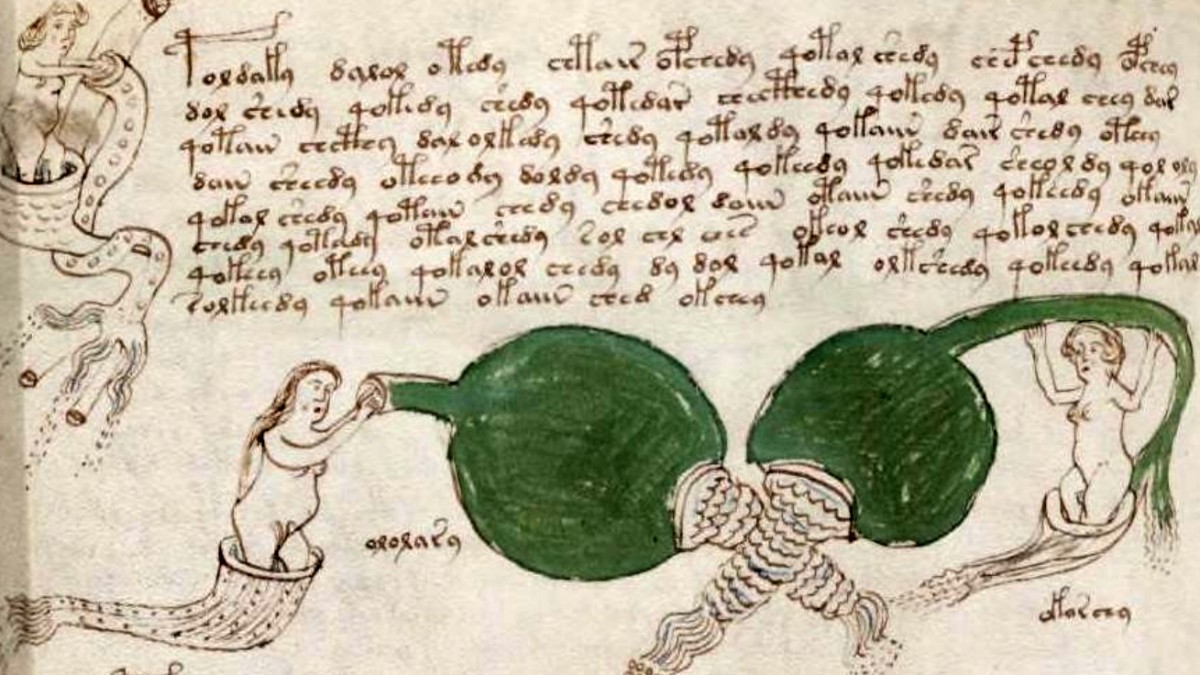
The Voynich Manuscript
The world's most famous undeciphered book is said to have once rested on the desk of Rudolf II in Prague. More than six hundred years since its creation, no one has decoded it.
Arcimboldo's Vertumnus
Rudolf's court painter Arcimboldo painted the emperor as Vertumnus—a portrait made purely of fruit, flowers, and vegetables. A face from afar, a riddle up close.
Marks in Stone
Marks and seals throughout the city that once served a very specific practical purpose—today waiting for someone to decode them.
Three Prague mysteries up close
The Golem: the clay guardian of the Jewish Quarter
Legend says that in the 16th century Rabbi Judah Loew ben Bezalel shaped a creature from Vltava clay to protect Prague's Jews. It came to life through a shem – a slip of paper bearing the name of God, placed in its mouth. When the Golem ran out of control, the rabbi removed the shem and hid the body in the attic of the Old-New Synagogue. The attic is still closed to the public, which keeps the legend very much alive. Rabbi Loew's grave is in the Old Jewish Cemetery, where visitors still leave notes with wishes. The Lost Letter of Franz Kafka also takes you through Josefov.
Charles Bridge: an open-air gallery of symbols
Charles IV laid the foundation stone in 1357, and tradition says neither the date nor the hour was chosen by chance. The thirty statues and sculptural groups were added much later, in the Baroque era, and most of those you see today are copies – the originals are kept safe in the Lapidarium. Every saint carries an attribute that let people recognise them without a name. And down by the pier on the Kampa side stands the knight Bruncvík, whose magic sword is said to be walled up somewhere inside the bridge. Decode the bridge's symbols in The Cipher of Charles Bridge.
Rudolf II and the world's most mysterious book
Emperor Rudolf II moved his court to Prague in 1583 and invited astronomers Tycho Brahe and Johannes Kepler, as well as alchemists John Dee and Edward Kelley. According to a period letter, Rudolf is said to have bought the Voynich Manuscript – a book written in an unknown script and filled with strange plants. Today it is kept at Yale University's library, and despite generations of codebreakers, no one has ever cracked it.
Prague in Books and Movies
This layer of hidden meanings has long drawn authors of mystery and cipher thrillers. Dan Brown, author of The Da Vinci Code, set his latest Robert Langdon novel, The Secret of Secrets, in Prague. Find out which places from the book you can visit in Dan Brown's Prague: real places from The Secret of Secrets. Franz Kafka drew on the same density of hidden meaning, creating a Prague that is a maze full of doors leading somewhere unexpected. See where he lived, wrote and where to find him today in Kafka's Prague – or follow his trail from the rotating Head of Franz Kafka or the statue on Dušní Street.
Want to Try It Yourself?
You don't have to wait for a movie or a book—you can experience your own cipher adventure right on the streets of Prague right now.
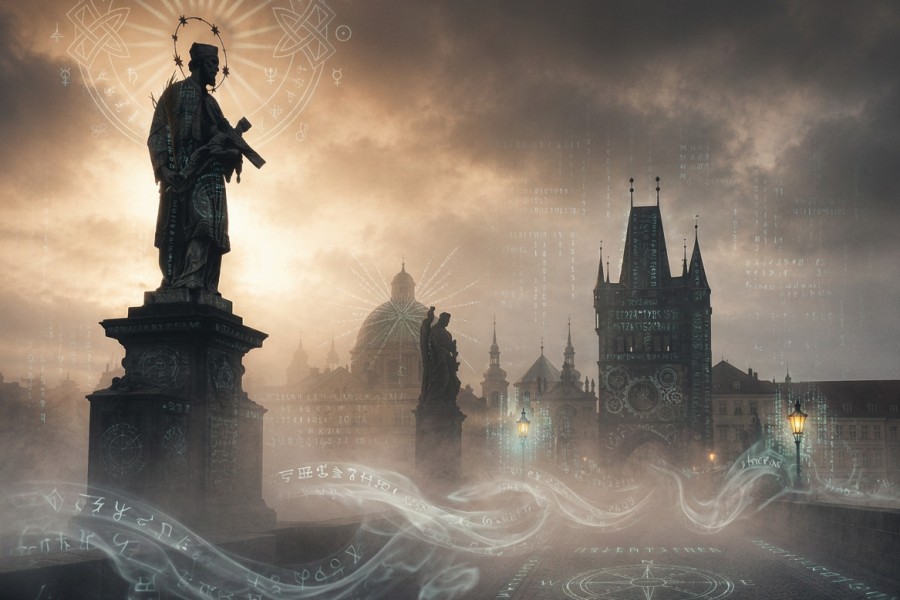
The Cipher of Charles Bridge
Everyone knows the Charles Bridge. Or do they? Set off on a cipher quest and discover stories, symbols, and details that thousands of people pass by every day without noticing.
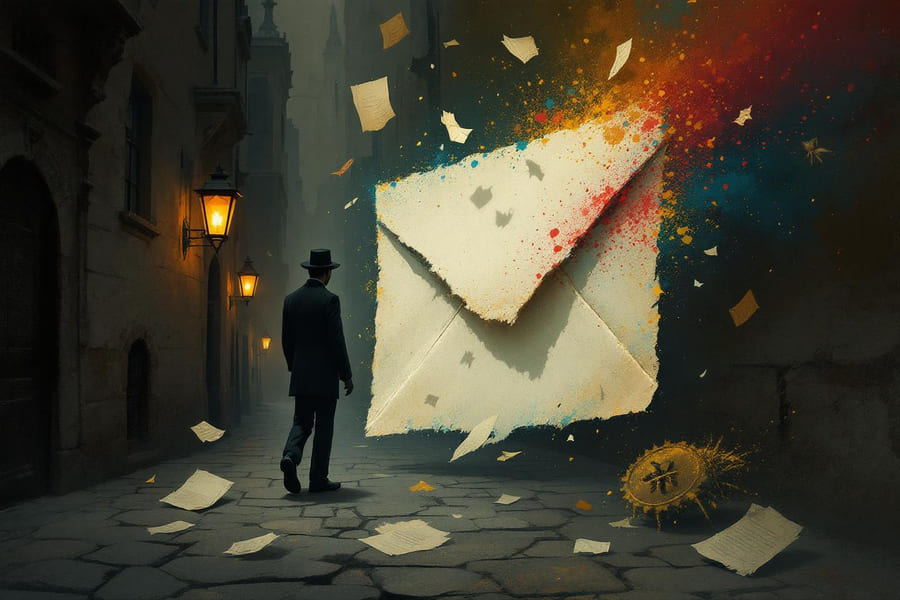
The Lost Letter of Franz Kafka
An old legend, a bit of literary magic, and a good dose of adventure – before his death, Kafka wrote a letter in which he revealed his innermost thoughts, and then tore it into pieces so that no one could read it. Its remains, however, are wandering through historical Prague, and your task is to follow in their footsteps.
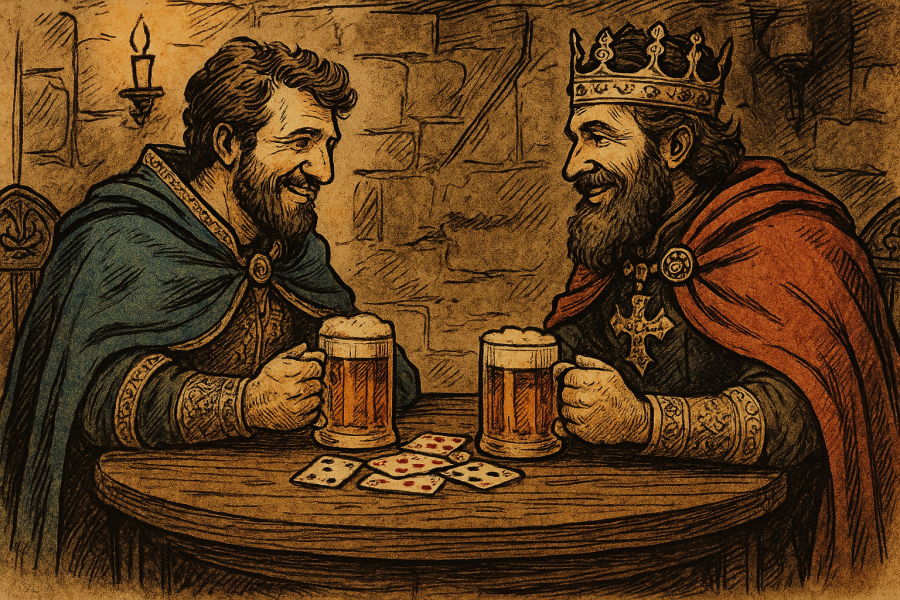
The Ghost of Prague drinks on
Six centuries have passed since the time of Charles IV, but his drinking companion Bohus is still sitting in a pub. Track him down through three historic Prague taverns, crack clever puzzles between sips of beer, and uncover legends you'll never hear on a typical city tour. No guide with an umbrella – just you, your crew, and Prague as it's known only to those who've been raising a glass here for six hundred years.
FAQ
Where in Prague can I find the most symbols and mysteries?
In the Old Town, in Josefov, on Charles Bridge and at Prague Castle. You can walk most of them in a single day.
Is the Golem really in the attic of the Old-New Synagogue?
That's what the legend says. The attic is closed to the public, so you're free to imagine the rest.
Where is the Voynich Manuscript today?
At Yale University's rare book library in the USA. In Prague, only the legend of Rudolf's court remains.
Can I explore mysterious Prague without a guide?
Yes. Our cipher games run in your phone's browser – play anytime, at your own pace. The game guides you, you find the clues around you.
Head into the Streets of Prague
Choose a game, charge your phone, and start solving.
Explore All Games